The impact of corruption on the climate is profound
We’ve compiled 103 cases around the globe and continue to gather information to paint a picture of what’s happening.
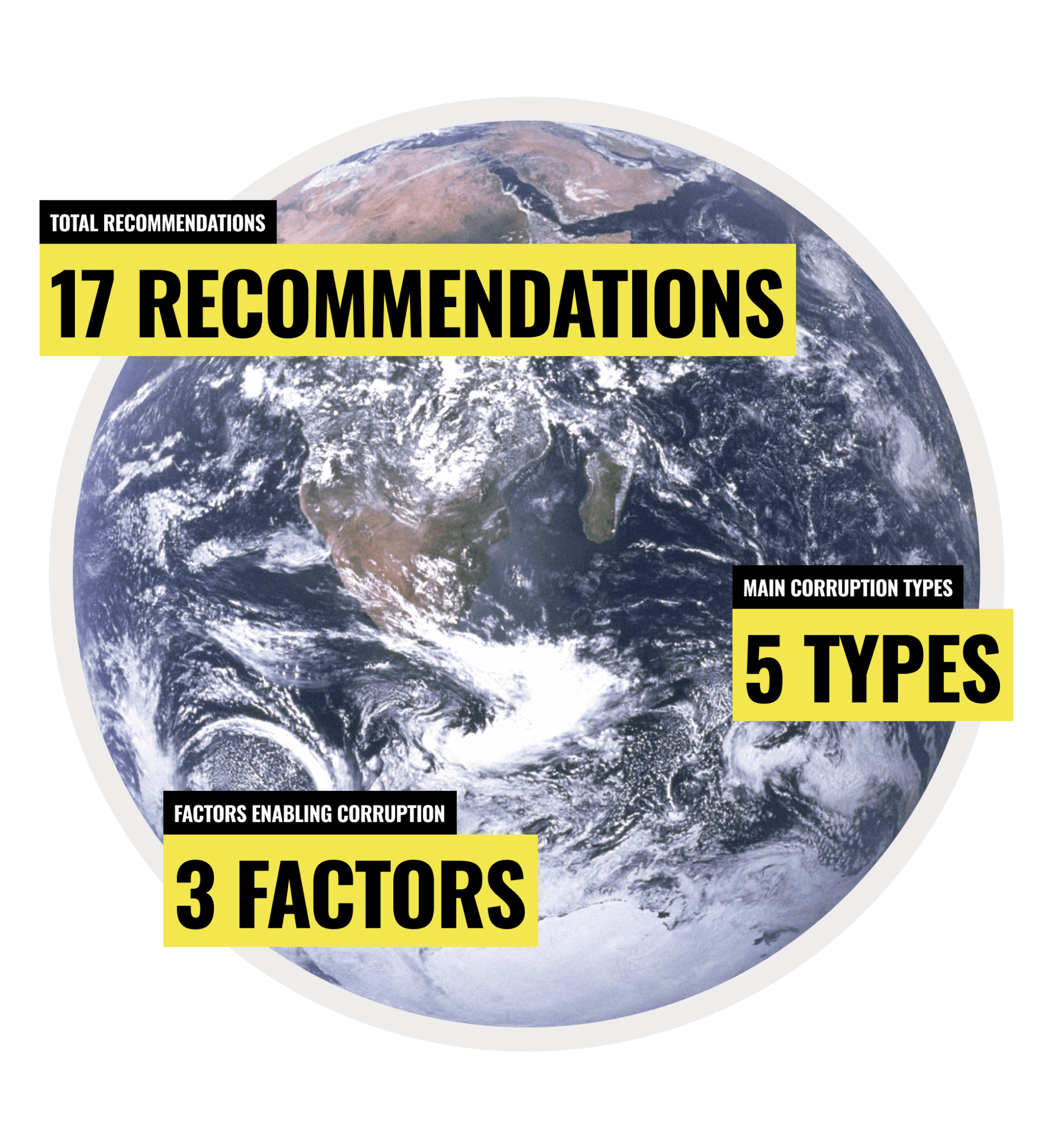
How Corruption Impacts our Climate
Help us Uncover Corruption Cases
We are collecting corruption cases linked to climate governance. Can you help us?

Climate Stories
Find out what Transparency International is doing to mitigate the effects of climate corruption


Frequently Asked Questions
What is the climate and corruption case Atlas?
The Climate and Corruption Case Atlas is a first-of-its-kind online database that tracks real-life corruption cases in climate-related projects and initiatives. Its objective is to document and highlight corruption impacting climate efforts.
By showcasing these cases, the Atlas demonstrates how corruption undermines global action to combat climate change and underscores the need for stronger safeguards to ensure that climate finance reaches its intended beneficiaries, supporting just and effective climate solutions.
In 2024, we published a report that highlights key findings and lessons from 80 documented climate corruption cases. The report provides insights into corrupt behaviours, enabling factors, and their negative impacts, while offering recommendations to strengthen integrity in climate governance. Read our analysis here.
What is climate-related corruption?
Corruption is playing a devastating role in the climate crisis. The 2024 Corruption Perceptions Index (CPI) released by Transparency International last February highlighted that corruption is making the fight against global warming and extreme weather events much harder, and the international community must urgently address the critical link between corruption and the climate crisis.
A lack of adequate transparency and accountability mechanisms increases the risk that climate funds may be misused or embezzled. Furthermore, climate corruption can manifest in the form of undue influence by polluting industries on decision- makers, or politicians with conflicts of interest due to their ties to oil and gas companies. These factors have historically obstructed the adoption of ambitious policies and measures needed to tackle climate change, prioritizing the interests of narrow groups over the common good.
Transparency International defines corruption as the abuse of entrusted power for private gain. Climate-related corruption refers to any form of abuse of entrusted power for private gain results in climate injustice and is hindering climate efforts.
For more information on how corruption undermines global climate efforts, please refer to our publications.
How are cases featured in our Atlas compiled?
The Climate and Corruption Case Atlas is developed by Transparency International’s Climate Governance Integrity Programme. Cases featured in the Atlas are collected from various sources, including:
- International news media
- Cases reported through climate complaints mechanisms
- Cases reported in literature
- Cases reported to us by Transparency International’s national chapters
- Cases reported through Transparency International’s Advocacy and Legal Advice Centres (ALACs)
- Direct submissions via our platform through emailing [email protected].
The Atlas is updated continuously to add newly reported cases. A case is included in the database if it involves any form of corruption - defined by Transparency International as the abuse of entrusted power for private gain - and if it relates to the climate topic. This extends to climate-related policymaking, international climate negotiations, climate finance governance, renewable energy development, and climate adaptation and mitigation projects.
What are the limitations of the climate and corruption case Atlas?
The Climate and Corruption Case Atlas is not a comprehensive or systematic dataset. It serves primarily for informational purposes, offering illustrative examples of climate-related corruption cases that have been reported in the media or flagged by Transparency International's Climate Governance Integrity Programme and its national chapters. Regional representation may be uneven, as many cases are sourced from English-language international media, which could result in an overrepresentation of corruption cases from certain regions.
The Atlas should not be used as an indicator of the overall level of climate-related corruption in any given country. For a broader assessment of global corruption experiences and perceptions, please refer to Transparency International's flagship tools: the annual Corruption Perceptions Index (CPI) and the Global Corruption Barometer (GCB).
Cases included in the Atlas are sourced from various media outlets, reports, and other publicly available information. While we strive to verify sources to the best of our ability, Transparency International does not investigate the cases flagged in the Atlas and cannot guarantee the accuracy of all data included.
How can you use the climate and corruption case Atlas?
The Atlas is a tool for education, risk identification, and improvement in the management of climate-related initiatives, ultimately helping to protect the integrity of climate finance processes. It can be used for:
Analysis and research
Researchers, journalists, and policy analysts can use the Atlas to:
- Investigate patterns of corruption in climate finance across different regions or sectors.
- Compare case studies to identify recurring weaknesses in project design or oversight.
- Inform studies on climate governance and anti-corruption strategies.
Risk Assessment and project design
Organisations can apply insights from the Atlas to:
- Identify and assess potential corruption risks in new or ongoing climate projects.
- Integrate lessons learned into the design phase of projects to prevent similar issues.
- Benchmark internal practices against documented best practices globally.
Strengthening integrity and oversight
Internal teams within climate finance institutions can use the Atlas to:
- Train staff on common corruption risks and warning signs.
- Improve internal monitoring and evaluation tools.
- Shape or refine anti-corruption policies and procedures..
External Engagement and accountability
The Atlas supports public and donor accountability by helping external partners to:
- Monitor whether integrity safeguards are being applied in climate spending.
- Hold implementers and funders to higher standards of transparency.
- Advocate for stronger controls in climate-related decision-making processes.
Who can benefit?
- Climate fund managers and administrators: to design better safeguards and avoid past mistakes.
- Government agencies and NGOs implementing projects: to reduce vulnerabilities and improve public trust.
- Donor agencies and international climate funds: to assess recipient readiness and align support with high-integrity practices.
- Civil society and media: to monitor climate finance use and demand greater accountability.
How can you report cases to us?
Help us enhance the Climate and Corruption Case Atlas by reporting climate- related corruption cases. You can:
- Submit a new case – If you are aware of a corruption case related to climate action, you can report it for inclusion in the Atlas.
- Update an existing case – If you have new information or notice an inaccuracy in a listed case, please let us know.
To submit a case, click here or contact us via email at [email protected]. We carefully review all submissions and verify sources to the best of our ability before adding cases to the Atlas. Please note, however, that submission does not guarantee publication.
Stay informed
Subscribe to our weekly newsletter to get the latest news and updates from Transparency International
