CPI 2024 for Western Europe & EU: Leaders’ hollow efforts cause worsening corruption levels
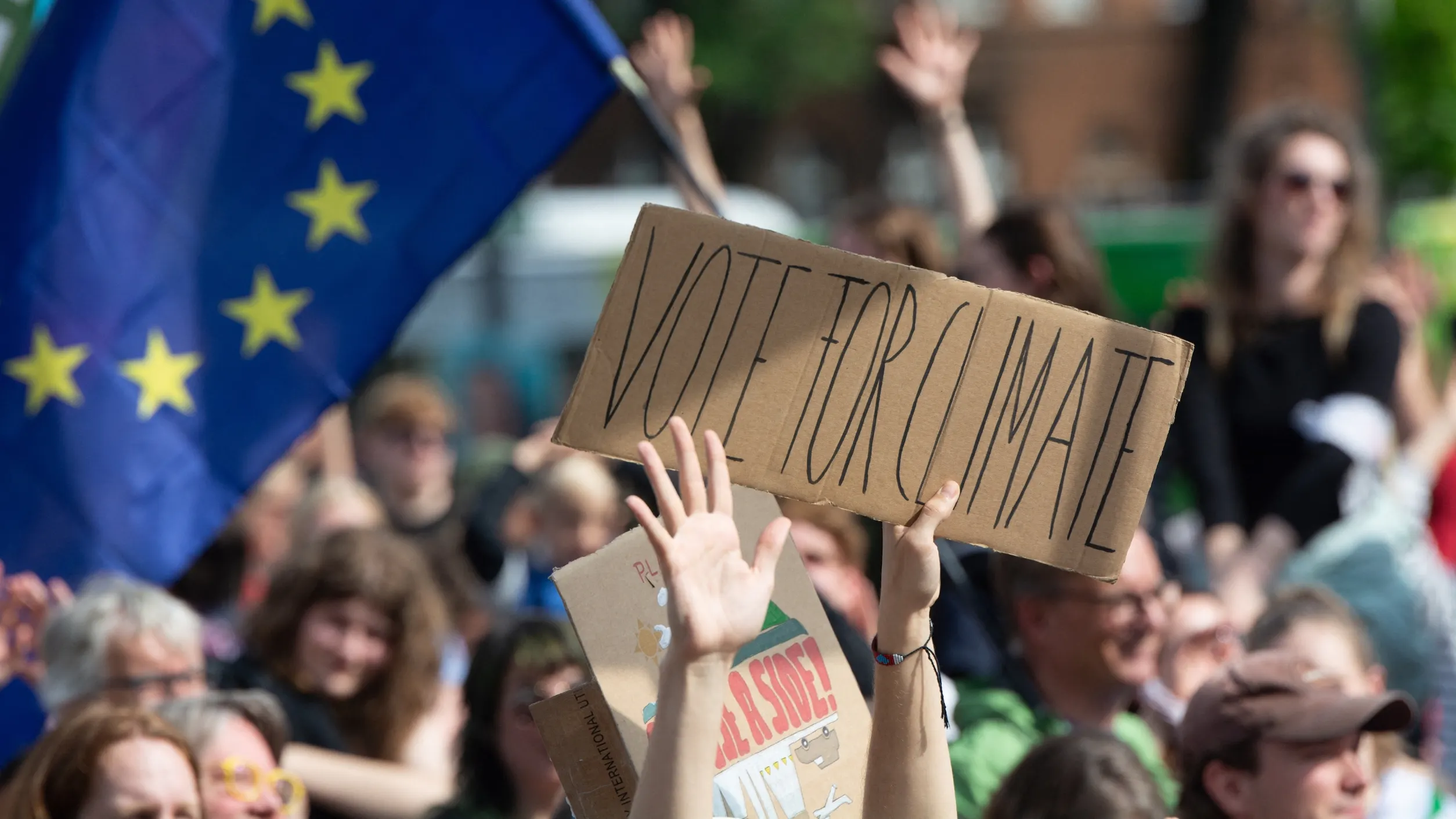
Cologne, Germany – A thousand climate activists gathered in front of Deutz station to protest and march for better climate policy ahead of the European election, 31 May 2024. Photo: Ying Tang/AFP
Flora Cresswell, Lidija Prokic and Altynai Myrzabekova, Regional Advisors for Europe, Transparency International
In fragile times, Europe's ability to combat corruption is falling short, hindering the bloc’s response to challenges that range from the climate crisis to fraying rule of law and overstrained public services.
How do countries measure up on corruption in the public sector?
Corruptions Perceptions Index 2024The Western Europe and European Union (EU) regional average on the Corruption Perceptions Index (CPI) has dropped for the second consecutive year to 64 out of 100. Major economies like Germany (CPI score: 75) and France (67) are declining, and even traditionally strong Nordic countries such as Norway (81) and Sweden (80) have recorded their lowest ever scores.
Others like Slovakia (49), Malta (46) and Hungary (41) have dropped as the rule of law breaks down. Of the 31 countries assessed, only six improved their scores, while 19 declined.
Regional overview
Please accept marketing cookies to view this content.
Integrity loopholes damaging climate crisis response
Recent climate-induced catastrophes, such as flooding in Spain (56) and heatwaves in southern Europe, highlight the need to prioritise integrity in climate efforts. Yet gaps in integrity frameworks are leaving climate action vulnerable to corporate lobbyists, who subvert climate policy for their own interests. This was made explicitly clear by oil giants scaling back CO2 emission targets in Europe, with a network of 50 organisations leveraging €64 million to amplify their lobbying on the EU Green Deal, raising questions about transparency standards across Europe.
Such examples abound in domestic contexts as well. Corporate lobbyists played a significant role in mitigating the ambitions of France’s (67) citizen consulted 2021 climate law, as seen by the watering down of bans on domestic flights. Germany's Transport Ministry dismissed its policy head over a nepotism scandal in hydrogen funding, whilst delays in a Federal Transparency Act hindered transparency and open data efforts.
Yet there is some cause for optimism. Germany’s (75) new lobby register will require fossil fuel companies to disclose climate lobbying, staving off corporate influence – even though requiring a full lobbying footprint would further boost its effectiveness.
Significant Improvers
Please accept marketing cookies to view this content.
Public contracting a persistent weak spot
Weak transparency and accountability in government procurement, including those involving EU funds, remain a major concern, opening doors for bribery and eroding citizen trust in public service delivery. According to the European Court of Auditors, competition for public contracts has worsened. In response, the Commission’s planned revisions to the EU’s 2014 Public Procurement Directive is an opportunity to address transparency gaps.
Systemic corruption in public procurement persists in several EU countries. In Malta (46), the former prime minister, and former ministers and officials, are currently facing criminal charges relating to corruption concerning the transfer of three public hospitals to a private company in a deal estimated at €4 billion. Hungary’s (41) Chief of the Prime Minister’s Cabinet Antal Rogan was recently sanctioned by the US Government for distributing public contracts to cronies loyal to himself and the Fidesz political party.
In Croatia (47), the Health Minister was fired over suspicions he accepted bribes in exchange for the approval of procurement of robotic medical equipment from a specific company at inflated prices for several public hospitals. Whilst in the Czech Republic (56), the Antimonopoly Office Chairman’s unchecked power and insufficient transparency expose public procurements to undue influence. The European Public Prosecutor’s Office investigated a contracting authority for rigging tenders for medical equipment supplies. Shockingly, privileged bidders even had access to the procurement management system to compare offers.
On the bright side, Estonia (76) pioneered one solution: its centralised e-procurement register has enhanced public access to procurement notices, allowing civil society and the broader public to scrutinise deals.
Significant decliners
Please accept marketing cookies to view this content.
Country to watch: Italy

Milan, Italy – Demonstrators attended Italy's Liberation Day demonstration, 25 April 2024. Photo: Alessandro Bremec/AFP
Recent reforms in anti-corruption measures are harming Italy's (54) progress. Adjustments to the legal framework, including the narrowing of influence trading definitions and the decriminalisation of abuse of office by public officials, weaken checks on ties between the public sector and organised crime. Transparency and data access gaps persist in monitoring how Italy spends its National Recovery and Resilience Plan (PNRR) funds. Whilst there are longstanding gaps in lobbying regulation and conflict-of-interest management compared to other European countries. However, Italy is taking steps to foster public trust, with the Anti-Corruption Agency serving as a regional example of progress in public procurement through its e-procurement database.
Rolls backs & half-hearted enforcement
Prime Minister Victor Orbán’s 15-year-long rule has been marked by systemic corruption and a continuous decline of the rule of law in
Hungary (41), whose CPI score has dropped 14 points since 2012. Even the withholding of €20 billion in EU funds has failed to compel the Orban-regime to restore rule of law and democracy.
In Austria (67), an independent committee found evidence of political influence on the judiciary in ongoing corruption investigations. Spain (56) too has declined four points, reflecting ongoing delays in its anti-corruption strategy and a comprehensive approach.
While some enforcement challenges remain to Lithuania’s (63) Law on Lobbying Activities, the introduction of a cross-declaration requirement has significantly increased transparency and accountability in public decision-making processes.
Country to watch: Slovakia

Kosice, Slovakia – Thousands of demonstrators gather in the main square to protest against the government for continuing to change laws that try to steer the country in a pro-Russian direction, 15 March, 2024. Photo: Robert Nemeti/AFP
In one year under Robert Fico’s government, Slovakia’s (49)score has sharply declined as numerous reforms erode anti-corruption checks and bypass public consultation. The government dissolved the Special Prosecutor’s Office and the police's National Crime Agency, responsible for fighting corruption and serious crimes. Combined with reduced statutes of limitations, lightened corruption penalties and waived potential sentences, these changes have limited the ability to prosecute perpetrators in ongoing cases and have fostered impunity in some high-level cases. Political appointments, bypassing of standard legislative procedures and government’s undermining of independent institutions and media, along with attacks against NGOs through Russian-style “foreign agent” narratives, have sparked significant backlash from citizens and civil society.
The EU must act decisively
As the region continues to decline, it’s time for European leaders to act. This year the EU has a key opportunity to enhance anti-corruption standards through a dedicated EU Anti-corruption Directive that can standardise regulation around the region and stop this decline.
How can top-scoring countries support global anti-corruption efforts?
CPI 2024: Trouble at the topHelp us keep up the pressure on governments
Donate to Transparency InternationalYou might also like...

CoSP11: A critical moment for shaping the future of integrity worldwide
News •
International Anti-Corruption Day highlights rising insecurity and injustice and builds momentum for CoSP11.

World Whistleblower Day: The cost of exposing facts in the age of misinformation
News •
On World Whistleblower Day, we spotlight brave truth-tellers exposing disinformation and the rising threats they face for speaking out.

Golden passports on trial: Can the EU stop countries from selling citizenship?
News •
The European Commission’s case against Malta could end a gateway for corrupt money – or open EU’s doors even wider to abuse.
Global Corruption report: Climate Change
News •
Transparency International’s Global Corruption Report: Climate Change explores climate-related corruption risks and argues that a dramatic strengthening of governance mechanisms…
