Corruption Perceptions Index 2022
Corruption Perceptions Index
El mundo necesita accion urgente
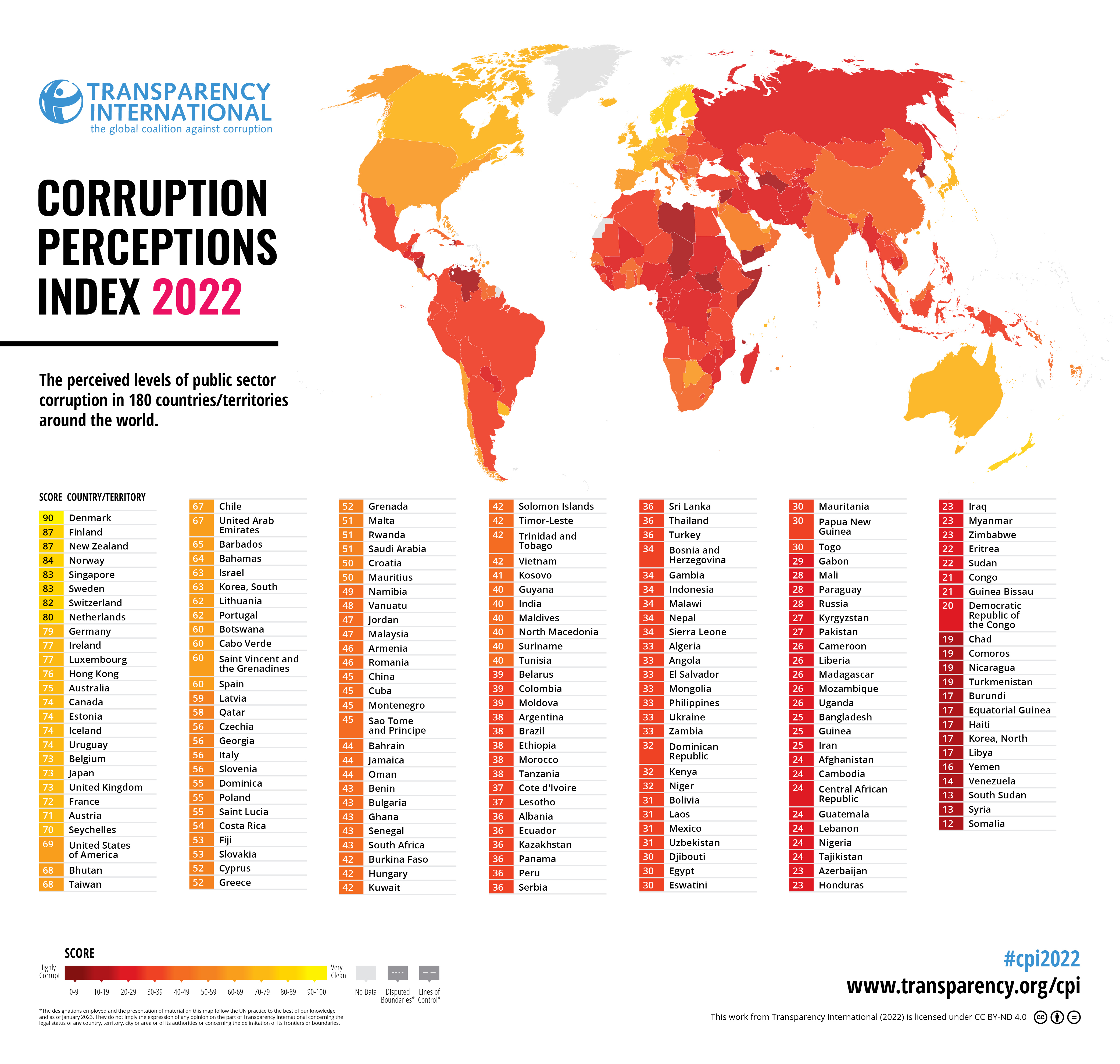
The 2022 Corruption Perceptions Index (CPI) shows that most countries are failing to stop corruption.
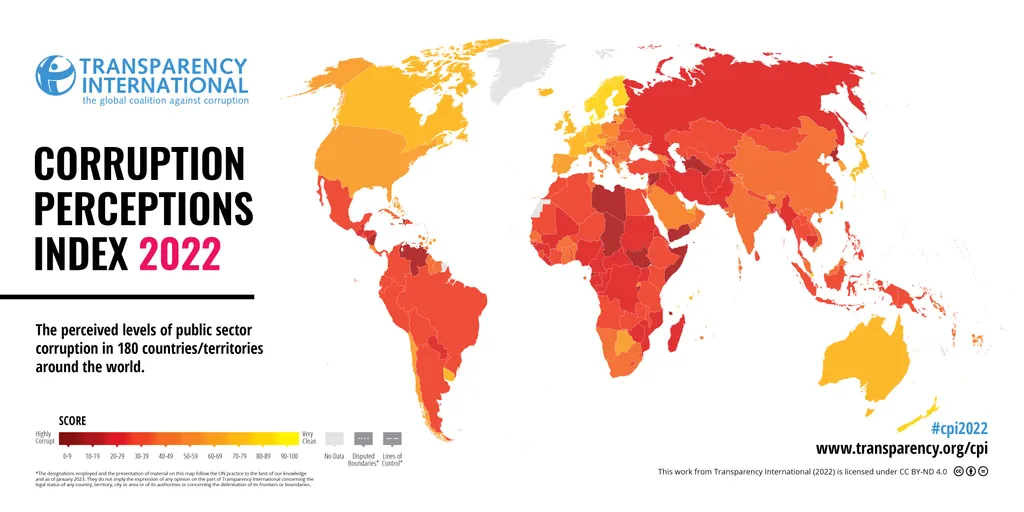
The CPI ranks 180 countries and territories around the world by their perceived levels of public sector corruption. The results are given on a scale of 0 (highly corrupt) to 100 (very clean).
The global average remains unchanged for over a decade at just 43 out of 100. More than two-thirds of countries score below 50, while 26 countries have reached their lowest scores yet. Despite concerted efforts and hard-won gains by some, 155 countries have made no significant progress against corruption since 2012 or have declined.
Conflict, security and trouble at the top
Global peace has been deteriorating for 15 years. Corruption has been both a key cause and result of this.
Corruption undermines governments' ability to protect people and erodes public trust, provoking increased security threats that are harder to control. On the other hand, conflict creates opportunities for corruption and subverts governments' efforts to stop it.
Even countries with high CPI scores play a role in the threats that corruption poses to global security. For decades, they have welcomed dirty money from abroad, allowing kleptocrats to increase their wealth, power and destructive geopolitical ambitions.
Leaders can fight corruption and promote peace all at once. Governments must open up space to include the public in decision-making – from activists and business owners to marginalised communities and young people. In democratic societies, the people can raise their voices to help root out corruption and demand a safer world for us all.
What’s happening around the world?
While every country faces different corruption challenges, this year’s index reveals ongoing stagnation around the world.
Countries in the top-scoring region, Western Europe and the European Union, have been at a standstill for over a decade or have declined over the past five years. Undue influence over decision-making, poor enforcement of integrity safeguards and threats to the rule of law continue to undermine governments’ effectiveness.
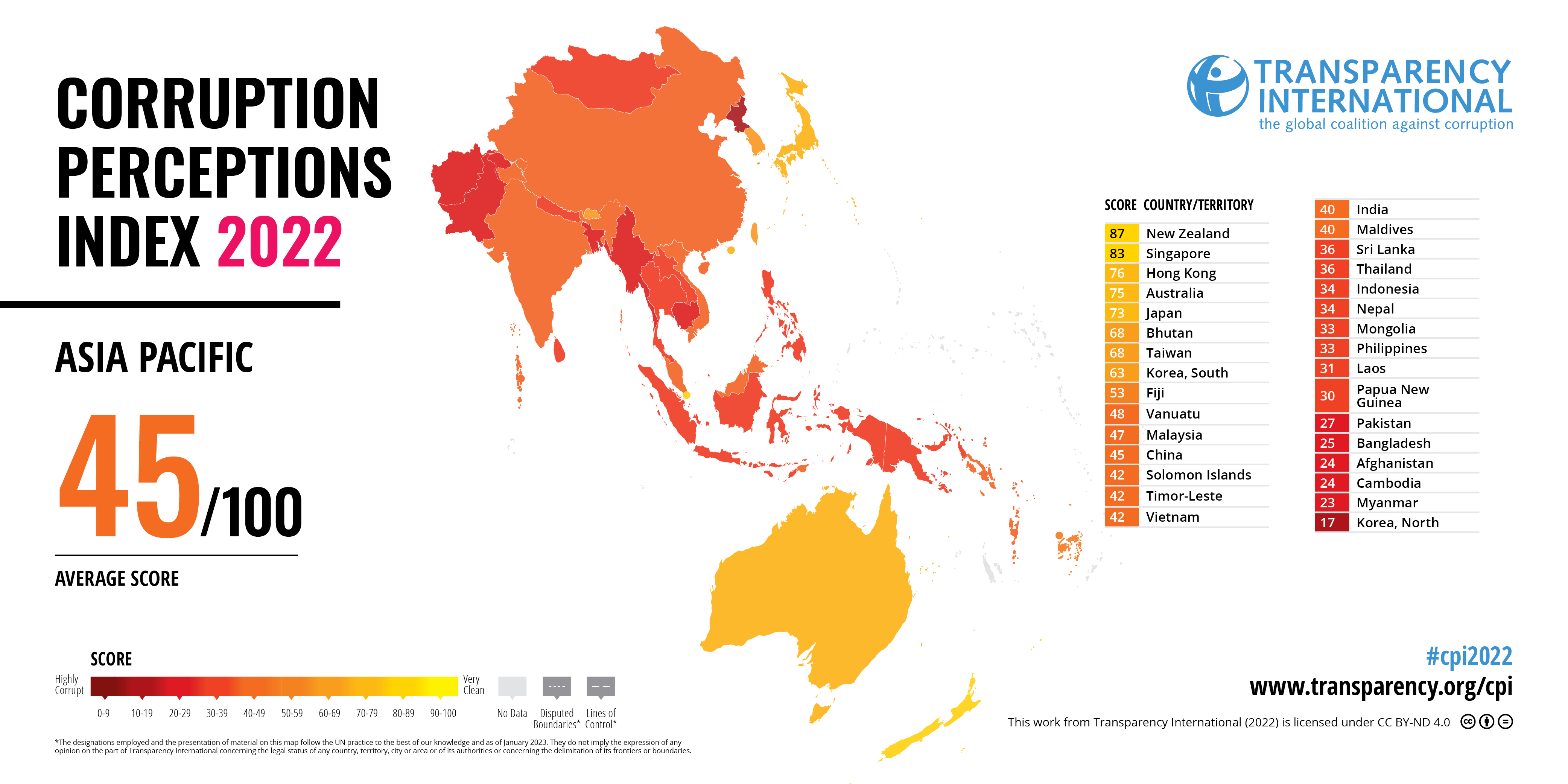
On the other end of the index, countries with low scores are also unable to make significant progress. In many parts of the Americas, Eastern Europe and Central Asia, and Sub-Saharan Africa, restrictions and attacks on civic space and basic freedoms continue as multiple crises threatening security and stability, democracy and human rights. Similarly, in parts of Asia Pacific, growing authoritarianism curtails dissenting voices and dilutes civil society’s function as a watchdog.
In the Middle East and North Africa, where unequal political and economic power is deeply intertwined with conflict, corruption is undermining democratic processes, causing pervasive civil unrest and threatening regional security and stability.
Check out the latest corruption wins, scandals and predictions for each region of the world.

Full 2022 Materials
Graphics to use and share

The CPI Explained
The CPI is the most widely used global corruption ranking in the world. But how is it calculated? What kinds of corruption does it cover? And why are certain countries not included? Watch this short explainer video, or dive straight into the most frequently asked questions.
